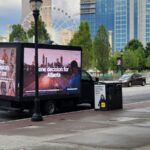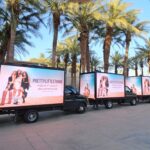
Companies actively seek fresh ways to boost brand exposure and connect with customers. An exciting choice has emerged in the vast sea of advertising options: mobile billboard trucks, offering extensive reach and interaction opportunities. But is investing in them really worthwhile? Let’s investigate by comparing their benefits to those of traditional advertising methods.
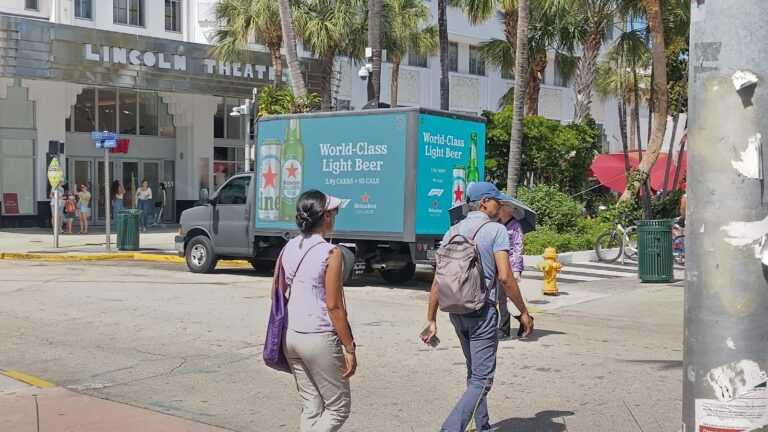
Mobile billboard trucks bring their fair share of benefits. However, it’s crucial to grasp the difference between indoor and outdoor advertising first. Outdoor advertising encompasses a wide variety of formats, including traditional and mobile billboards, transit ads, and street furniture, targeting audiences in public spaces. Conversely, indoor advertising targets audiences within enclosed spaces such as malls, airports, and transit areas. Mobile billboard trucks actively bridge the gap between these two realms, offering the mobility of outdoor advertising with the precision targeting of indoor advertising.
Before delving into the benefits of mobile billboard trucks, it’s crucial to differentiate between outdoor and indoor advertising. Outdoor advertising includes a wide array of formats, such as billboards, transit ads, and street furniture, targeting audiences in public spaces. Conversely, indoor advertising focuses on captive audiences within enclosed spaces like malls, airports, and transit hubs. Mobile billboard trucks effectively bridge this gap, offering the mobility of outdoor advertising with the precision targeting of indoor advertising.
Digital Out-of-Home (DOOH) advertising marks a revolutionary shift in the outdoor advertising landscape. By harnessing digital screens, DOOH offers dynamic content delivery, real-time updates, and interactive features. Mobile billboard trucks embody the essence of DOOH by merging the flexibility of traditional outdoor advertising with the dynamic capabilities of digital screens, delivering engaging content directly to consumers on the move.
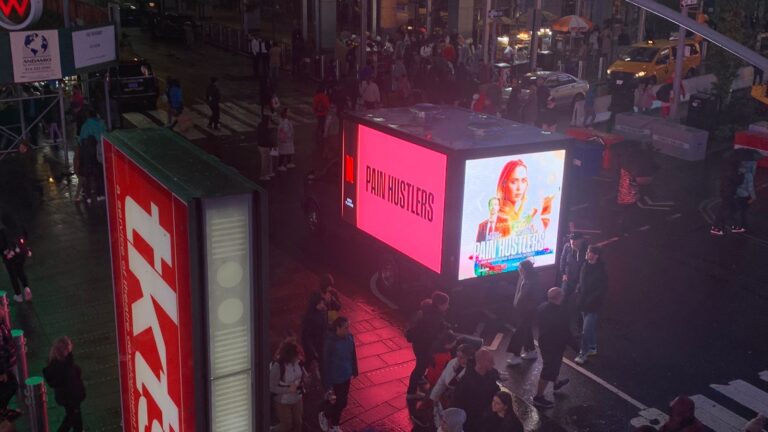
Mobile billboard trucks present a cost-effective alternative to traditional static billboards, especially in high-traffic areas like New York’s Times Square. Despite the competitive landscape, mobile billboards provide significant exposure at a fraction of the cost, maximizing ROI for advertisers. Case studies, such as Netflix‘s “Pain Hustlers” campaign, underscore the cost efficiency of mobile billboard advertising, achieving comparable impressions at a reduced expenditure.
It can become quite competitive to acquire prime landscape and it can often come with a hefty price tag. However, Netflix’s strategic utilization of mobile billboard trucks for their show “Pain Hustlers” at Times Square proved to be a game-changer, demonstrating the cost-effectiveness and impact of this innovative approach.
Netflix faced the challenge of promoting “Pain Hustlers” amidst the bustling backdrop of Times Square, known as one of the most coveted advertising locations globally. Instead of opting for traditional static billboards, which can command exorbitant prices in such high-traffic areas, Netflix chose to leverage mobile billboard trucks. This decision not only allowed them to achieve the same number of impressions as static billboards but also enabled them to secure prime locations within Times Square at a fraction of the cost.
The results were impressive. Despite the competitive landscape and the premium associated with advertising in Times Square, Netflix’s mobile billboard campaign for “Pain Hustlers” garnered significant attention and engagement. By strategically positioning the mobile billboards in high-traffic areas and during peak times, Netflix maximized exposure while minimizing expenses.
This case study underscores the effectiveness of mobile billboard trucks as a cost-efficient alternative to traditional advertising methods, particularly in prominent locations like Times Square. By achieving comparable impressions at a reduced expenditure, Netflix demonstrated the value and versatility of mobile billboard advertising in capturing audience attention and driving brand awareness.
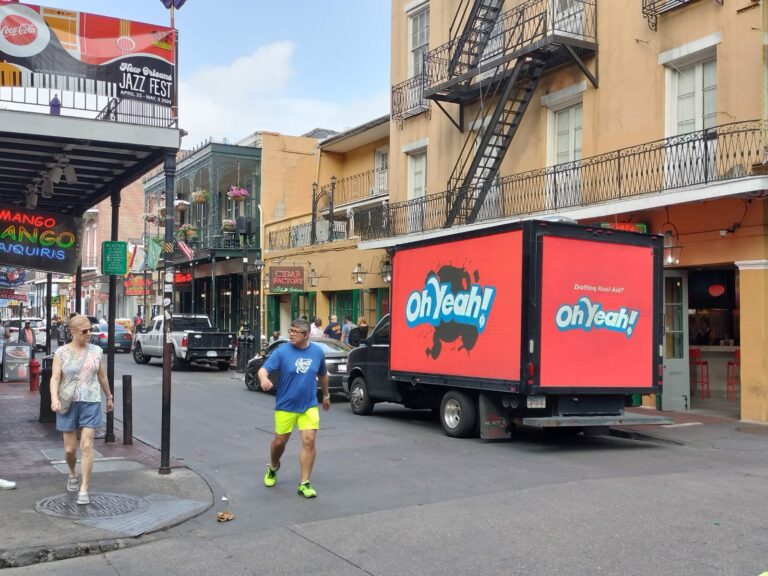
Mobile billboard trucks excel in penetrating hard-to-reach areas where traditional advertising methods fall short. Whether targeting remote neighborhoods or infiltrating competitor markets, these mobile units offer unparalleled flexibility in reaching elusive demographics.
New Orleans has captivating, but narrow streets. This presents a unique challenge for advertisers seeking visibility in hard-to-reach areas. Traditional billboards, with their large and stationary structures, often find themselves limited in placement options due to space constraints. However, a case study of a digital billboard truck deployed in the heart of New Orleans showcases the innovative solution to this dilemma, demonstrating the effectiveness of mobile advertising in maximizing visibility in unconventional spaces.
By strategically positioning a digital billboard truck in the small and narrow streets of New Orleans, advertisers capitalized on the flexibility and mobility of this advertising medium to reach audiences in areas where traditional billboards cannot be placed. The dynamic nature of digital billboards allowed for eye-catching displays and real-time content updates, capturing the attention of pedestrians and motorists alike in the midst of the city’s vibrant atmosphere.
This case study highlights the adaptability and versatility of digital billboard trucks in penetrating hard-to-see areas and engaging with audiences in unconventional spaces. By leveraging the mobility of these trucks, advertisers can effectively navigate the narrow streets of New Orleans and other similarly challenging environments, maximizing visibility and brand exposure in locations where traditional billboards fall short.
With mobile billboard trucks, advertisers have the liberty to select prime locations for maximum impact. Whether capitalizing on competitor markets or targeting specific neighborhoods, advertisers can tailor their campaigns to align with strategic objectives, maximizing visibility and engagement.
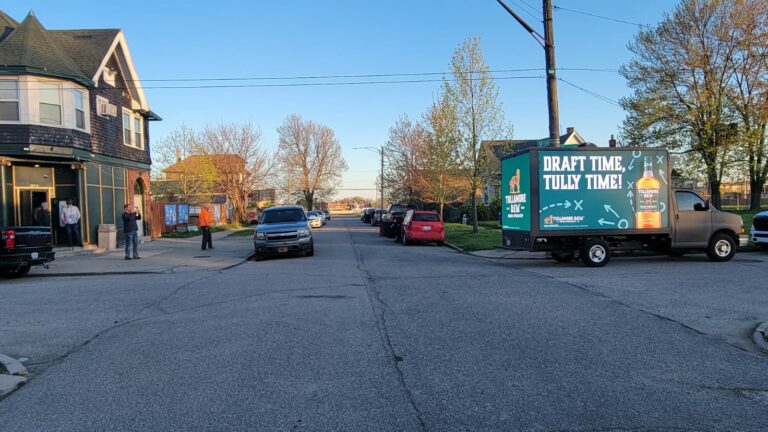
Positioned at eye level, mobile billboard trucks capture attention and enhance brand visibility. Unlike stationary billboards that vie for fleeting glances, mobile units command attention, allowing consumers ample time to absorb the message and connect with the brand.
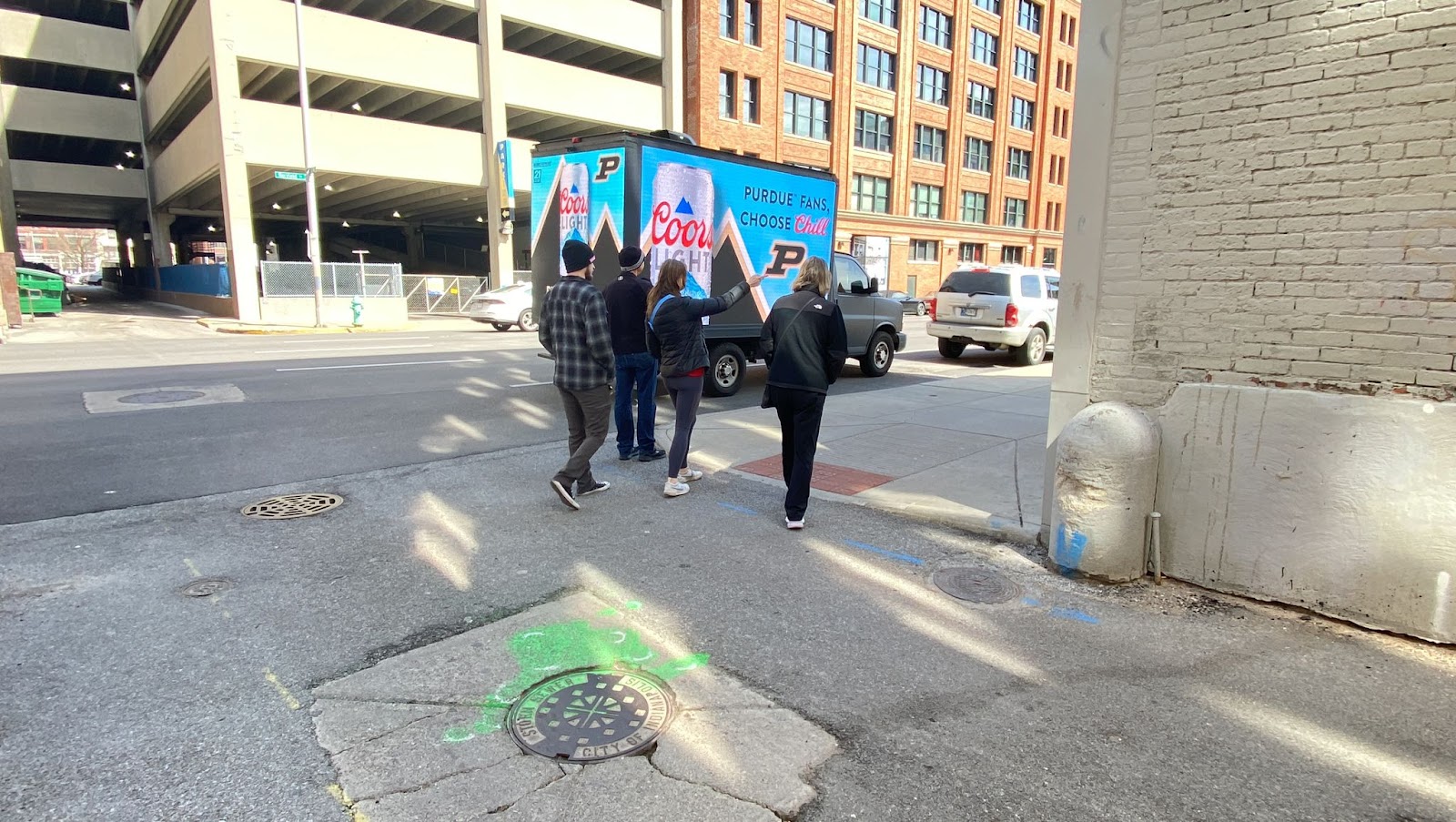
Proximity and timing can make all the difference in capturing consumer attention and influencing purchasing decisions. A compelling case study illustrates the strategic placement of a billboard truck directly in front of an establishment that sells the same product being advertised. This innovative approach not only enhances brand visibility but also capitalizes on the psychological effect of priming, whereby consumers are more likely to choose a brand that is top-of-mind at the point of purchase.
Imagine a scenario where a billboard truck promoting a popular beverage brand is parked right outside a convenience store or a café that sells the same beverage. As customers enter the establishment, they are greeted with the sight of the vibrant and enticing advertisement, immediately associating the brand with their current shopping or dining experience. This not only reinforces brand awareness but also creates a subconscious connection between the product and the consumer’s immediate needs or desires.
The impact of this strategic placement is profound. By positioning the billboard truck in close proximity to the point of purchase, advertisers effectively intercept consumers at a critical moment in their decision-making process. The visual reinforcement of the brand message as consumers enter the establishment primes them to consider the advertised product, increasing the likelihood of purchase.
Furthermore, this approach enhances the overall consumer experience by seamlessly integrating advertising into the shopping or dining environment. Instead of feeling intrusive or disruptive, the presence of the billboard truck adds value by providing relevant and timely information about a product that is readily available for purchase nearby.
This campaign underscores the power of strategic placement in maximizing the effectiveness of advertising efforts. By capitalizing on proximity and timing, advertisers can leverage the psychological principles of priming to influence consumer behavior and drive sales.
Integrating audio into mobile billboard ads enhances engagement and message retention. By leveraging audio cues, advertisers create a multisensory experience that resonates with consumers, maximizing the effectiveness of their campaigns.
Numerous case studies underscore the effectiveness of mobile billboard advertising across diverse industries. From entertainment giants like Netflix and Sony Music to consumer brands like Kool-Aid and Bud Light, companies have leveraged mobile billboard trucks to achieve significant results. Amazon Prime’s strategic use of mobile billboards during Prime Day promotions and Coachella’s immersive brand experiences exemplify the versatility and effectiveness of this advertising medium.
With Can’t Miss US, experience the incredible impact of mobile billboard advertising. We’re dedicated to becoming the standard in this highly competitive field. With the expertise of our experienced team, we’re going to show how mobile advertising may completely transform the way you communicate with the people you want to reach. We can help with every step of the way, from creating eye-catching campaigns to figuring out the best paths for maximum awareness. Together, let’s make sure that the right audience get your message when it needs to. Get in touch with us right now to discuss your advertising needs in more detail at no cost!
As an advertiser, finding your target audience is important for success. With innovative platforms like LED mobile truck advertising, understanding how to pinpoint and engage with the right demographic becomes even more critical. These mobile billboards offer a unique opportunity to reach audiences in diverse locations and contexts, but without...
Read More
Mobile billboard advertising is a dynamic and impactful way to reach your target audience on the move. However, even with the flexibility and creativity that mobile billboards offer, there are common mistakes that can hinder the effectiveness of your campaign. In this blog post, we’ll delve into the top 10...
Read More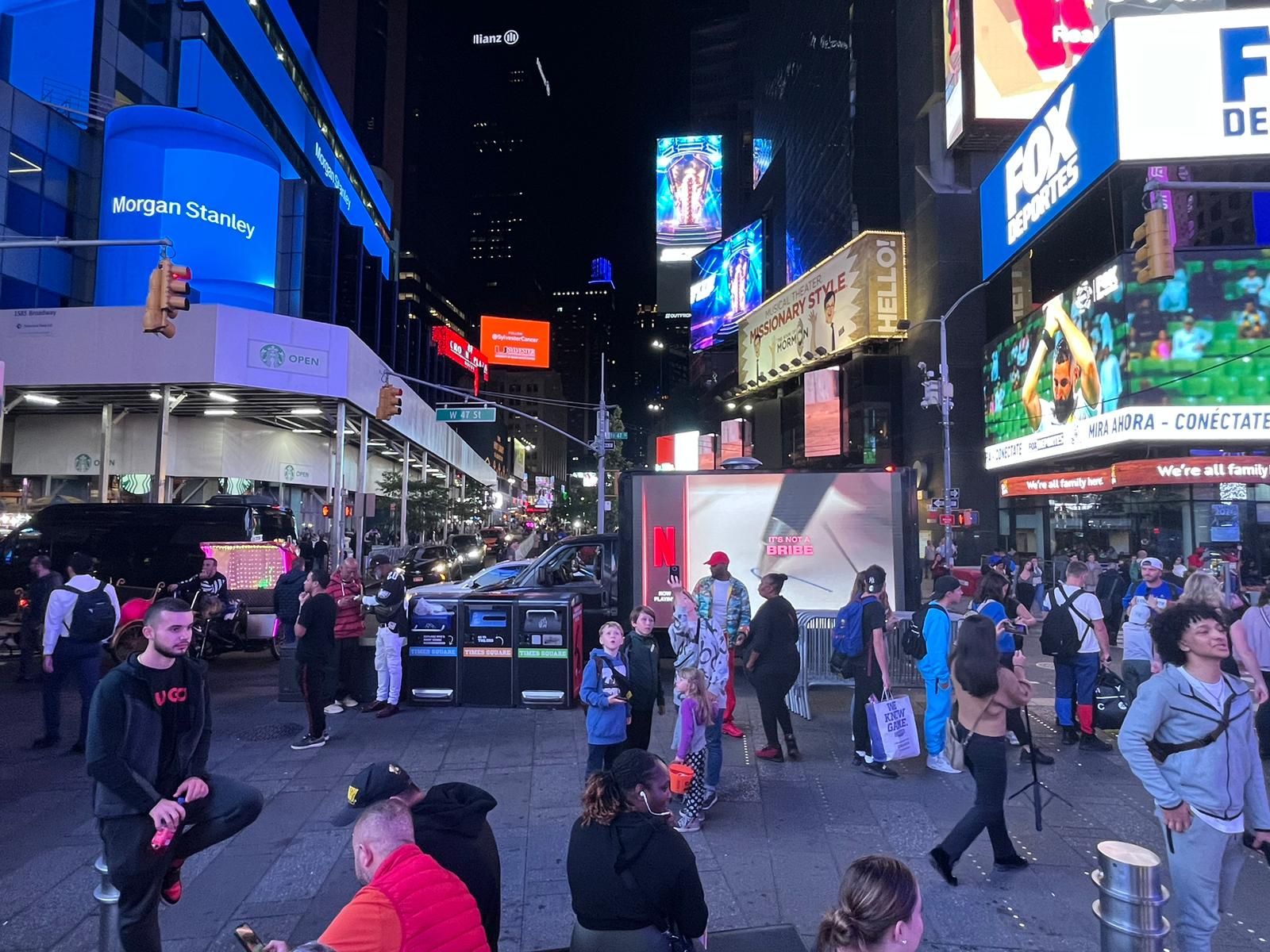
Outdoor advertising is an ever-evolving realm, businesses are presented with an array of choices to enhance brand visibility. Two prominent options, digital billboard trucks, and static digital billboards stand out, each offering unique advantages in the competitive world of marketing. Understand the key differentiators between these two mediums, shedding light...
Read More
© Copyright 2022- Cant Miss Us. All Rights Reserved.